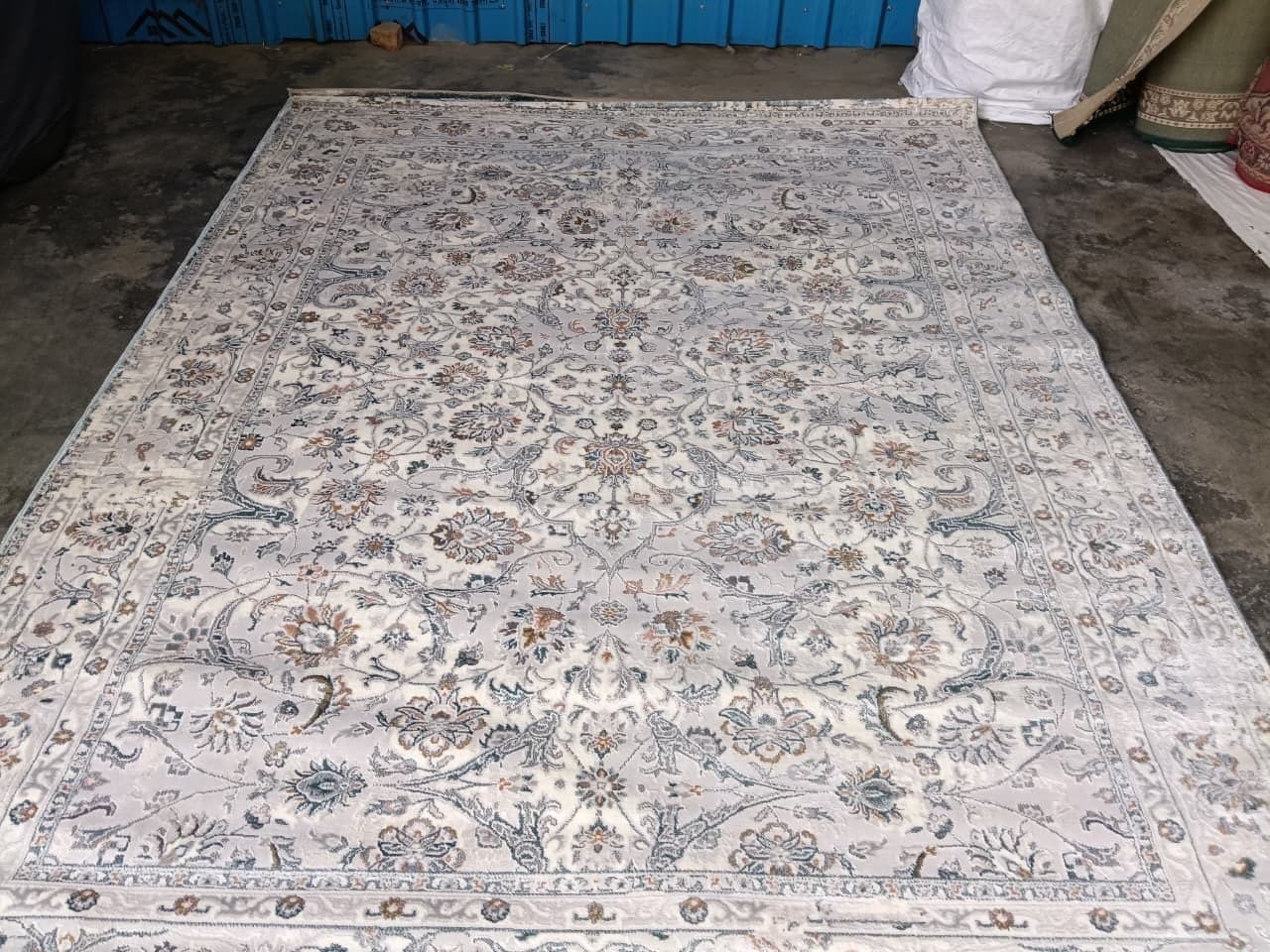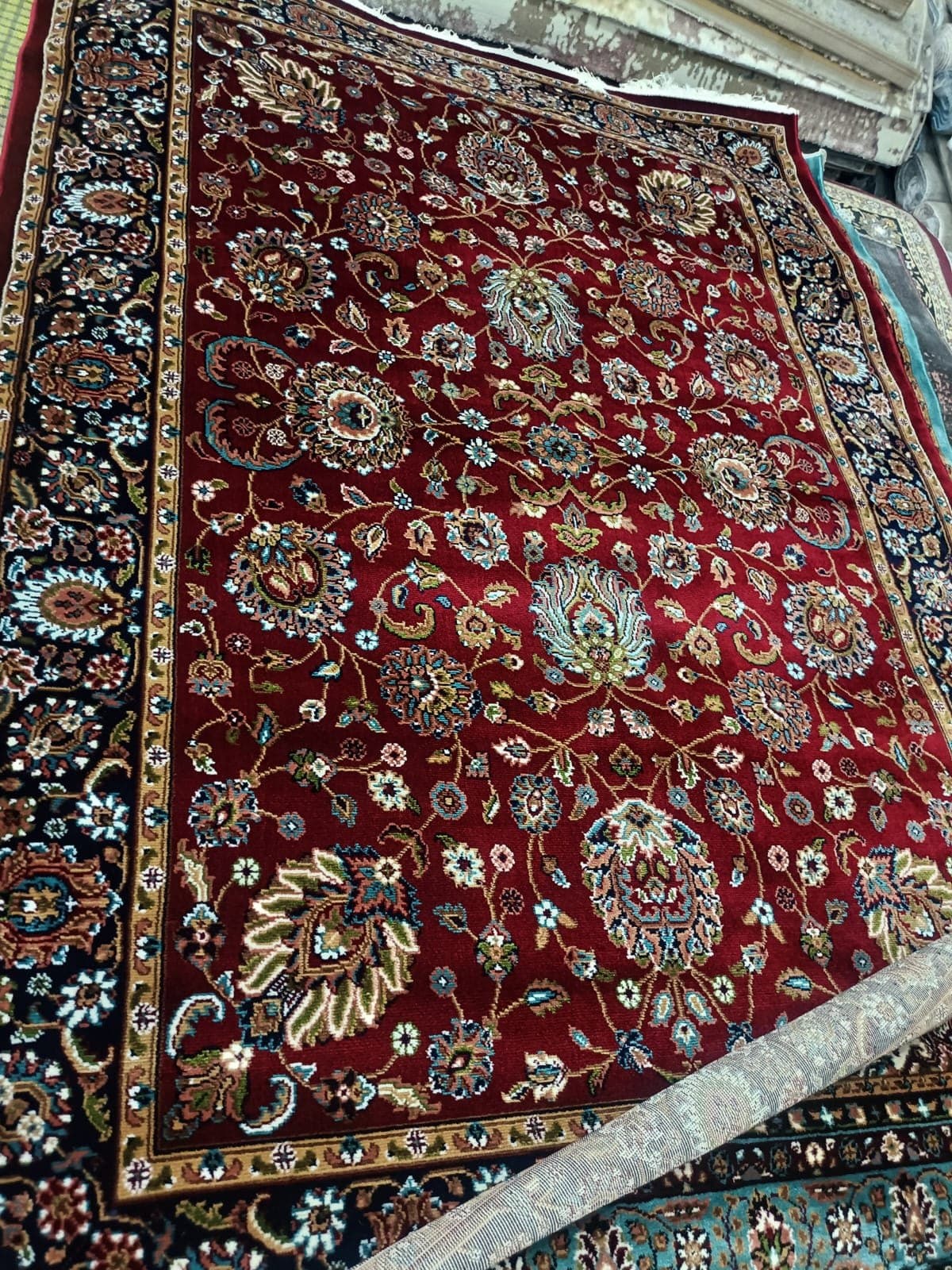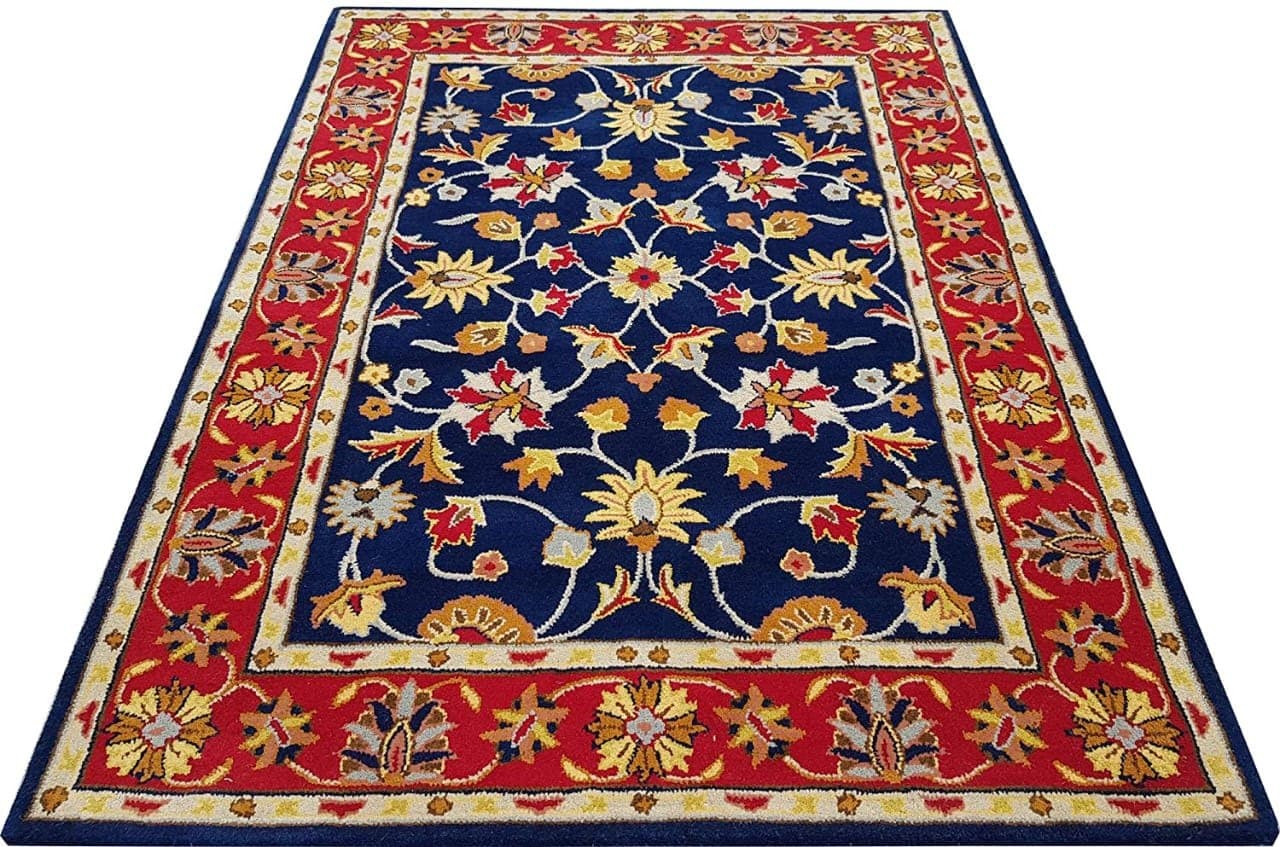
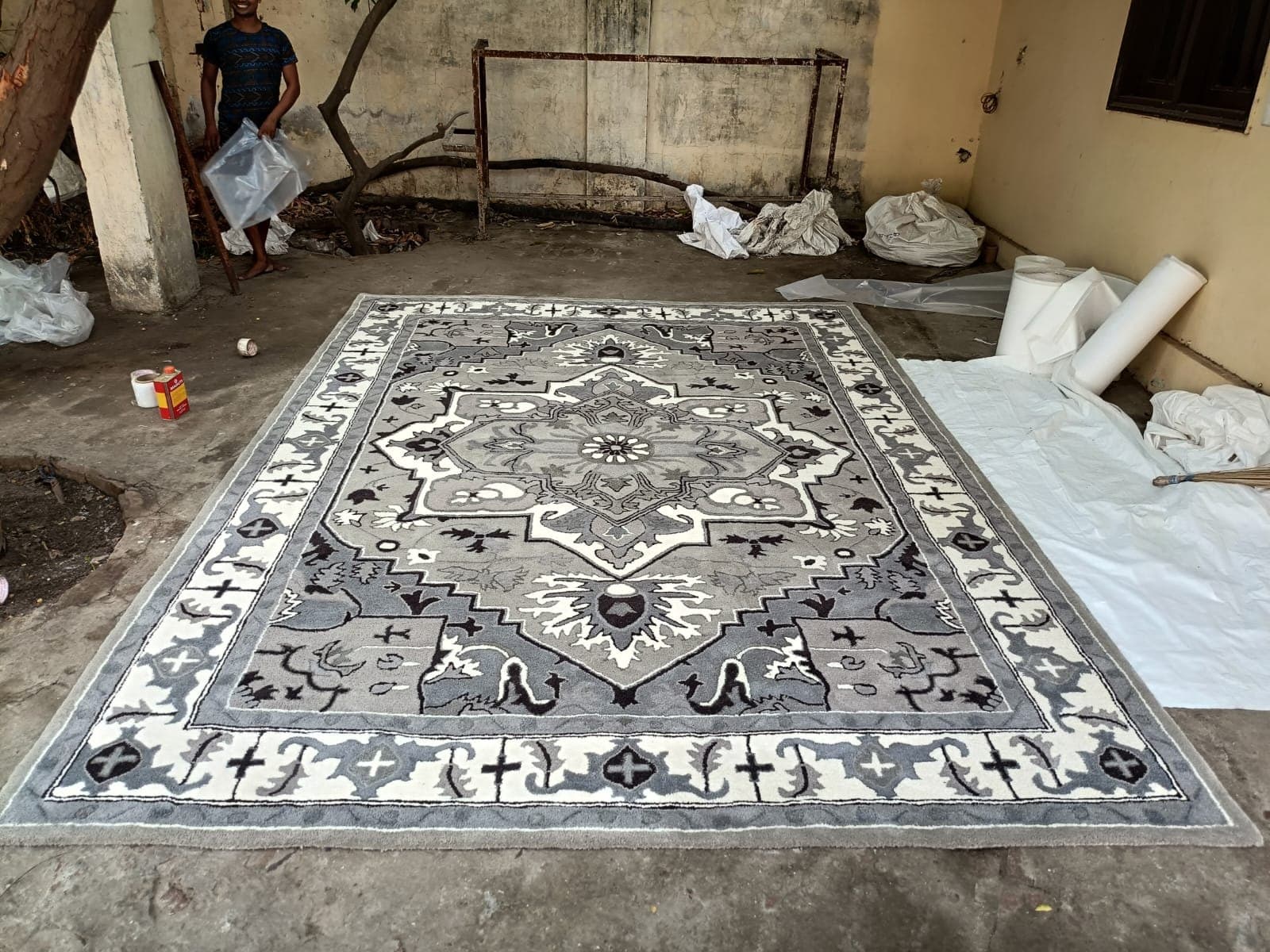
Knot count, abrash, selvedge, fringe — the five things to look at before you buy, and what each one tells you about the loom it came off.
Turn the carpet over. Everything worth knowing is on the back. On a hand-knotted piece you will see the pattern repeated knot for knot on the reverse, slightly softer but unmistakably the same design. A machine-made rug hides its back behind a glued mesh.
Count the knots along one inch of the weft. Twelve knots to the inch — what we call 12/60 quality — is the workhorse of a good wool carpet. Sixteen and above belongs to silk, where the detail justifies the extra months on the loom.
Look for abrash: the gentle banding of colour across the field. It happens because natural dyes are mixed in small batches, and it is the surest sign that a human being, not a machine, made your carpet.
Check the selvedge — the finished side edge — and the fringe. On a hand-knotted carpet the fringe is the warp itself, continuing out of the body of the rug. A fringe stitched on afterwards is a shortcut, and it will be the first thing to fail.
Finally, put it on the floor and walk on it barefoot. A well-made carpet feels dense and cool, and springs back where your heel pressed it. That is the wool doing what it has done for five hundred years.